
- September 2, 2026
Water Quality in Poultry Farming: Why It Matters
Water is one of the most important resources in poultry farming, yet it is often overlooked when managing flock performance. Birds depend on clean and suitable-quality water every day for drinking, digestion, temperature regulation, and overall well-being.
This is why water quality in poultry farming should be treated as an important part of daily farm management—not simply as a basic utility.
Poor-quality water can affect water intake, contribute to problems in drinking systems, increase equipment maintenance, and potentially influence overall flock performance. Understanding and managing water quality can help poultry farmers maintain a cleaner and more efficient water delivery system.
Why Is Water Quality Important in Poultry Farming?
Poultry birds consume water throughout the day, and water intake is closely connected with their normal feeding and daily activities.
When water is clean, accessible, and suitable for consumption, birds can maintain their normal drinking patterns. However, problems such as excessive minerals, hardness, contamination, unpleasant taste, or poor water-line hygiene can affect the quality of the water reaching the birds.
Effective water quality in poultry farming therefore involves more than simply having a sufficient water supply. Farmers need to consider both the quality of the source water and the condition of the complete drinking-water system.
How Poor Water Quality Can Affect Poultry Farms
1. Reduced Water Intake
Birds may drink less when water has an unpleasant taste, contains excessive minerals, or is affected by contamination.
Changes in water intake can also affect normal feeding and flock management. Monitoring water consumption can therefore help farmers identify potential water-quality or equipment-related problems at an early stage.
2. Problems in Water Lines
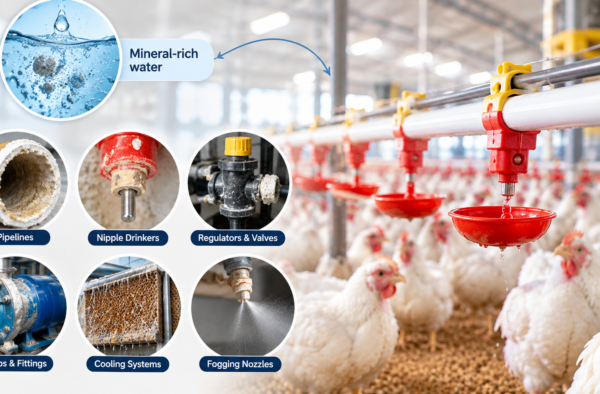
Hard water contains dissolved minerals that can gradually accumulate inside poultry water lines.
Over time, mineral deposits can contribute to:
- Restricted water flow
- Partially blocked pipelines
- Reduced performance of nipple drinkers
- Uneven water availability
- Increased cleaning requirements
Keeping the water-delivery system clean and functioning properly is an important part of poultry water management.
3. Scale Buildup in Drinking Equipment
Mineral scale can accumulate on nipples, fittings, pipes, tanks, and other components of the drinking system.
As deposits increase, equipment may require more frequent cleaning and maintenance. In severe cases, buildup can interfere with proper water delivery.
This is one reason why controlling hard-water scale can be important for modern poultry farms.
4. Increased Maintenance Requirements
Poor water quality does not only affect the birds—it can also affect the infrastructure used to deliver water.
Mineral deposits and water-quality issues may increase the need for:
- Water-line cleaning
- Drinker maintenance
- Pipeline inspection
- Equipment replacement
- System flushing
Better water management can help farms reduce avoidable maintenance work and keep their drinking systems operating efficiently.
Water Quality Parameters Poultry Farmers Should Monitor
There is no single measurement that tells you everything about water quality. Different parameters can provide different information about the suitability and condition of the water.
Some important parameters include:
TDS
Total Dissolved Solids (TDS) indicate the amount of dissolved substances present in water. Monitoring TDS can help farmers understand changes in their water source and identify potential mineral-related concerns.
pH
Water pH can influence water quality, equipment performance, cleaning practices, and the effectiveness of certain water-management procedures.
Hardness
Hard water contains minerals such as calcium and magnesium. Over time, these minerals can contribute to scale formation in pipelines and drinking equipment.
Microbial Quality
Water can become contaminated at the source or within storage tanks and distribution lines. Regular monitoring and appropriate sanitation practices are therefore important components of poultry water management.
Water Quality and Water Intake
Water intake is an important indicator that poultry farmers can monitor as part of routine flock management.
If birds suddenly consume less water than expected, farmers should investigate possible causes rather than assuming the change is related only to the birds.
Potential factors can include:
- Water temperature
- Water availability
- Drinking-system performance
- Water quality
- Environmental conditions
- Feed changes
- Flock health
Regularly observing water consumption and checking the drinking system can help identify problems earlier.
The Hidden Impact of Hard Water in Poultry Farms
Hard water is a common concern because dissolved minerals can gradually form deposits inside water-delivery systems.
A poultry farm may have good-quality source water, but problems can still develop further along the system if mineral deposits accumulate inside pipelines and drinkers.
This makes water quality in poultry farming a system-wide consideration.
Farmers should look beyond the water source and also evaluate:
Source Water → Storage Tank → Water Lines → Drinkers → Birds
Every stage can influence the quality and availability of water reaching the flock.
How Better Water Management Can Help
A good poultry water-management program should include regular monitoring, proper cleaning, and maintenance of the complete drinking system.
Farmers can consider the following practices:
- Test water quality periodically
- Monitor TDS, pH, hardness, and microbial quality
- Keep storage tanks clean
- Inspect water lines regularly
- Check nipple drinkers for proper operation
- Flush lines when required
- Monitor changes in water consumption
- Address mineral scale before severe buildup occurs
- Maintain proper water sanitation practices
The exact testing and treatment approach should depend on the farm’s water source, local conditions, equipment, and veterinary or water-quality recommendations.
Can Water Conditioning Help Poultry Farms?
Water conditioning can be useful where mineral content and hard-water scale are creating ongoing problems in the drinking-water system.
MR WATER’s Anti-Scale X technology is designed to help control hard-water scale without adding conventional chemicals or salt. It can be used in applications where mineral buildup is a concern, helping protect water lines and equipment from scale-related problems.
For poultry farms, the objective is not simply to treat the water—it is to maintain a reliable water-delivery system that can provide suitable-quality water to the flock while helping reduce unnecessary equipment maintenance.
Why Poultry Farmers Should Make Water Quality a Priority
Feed naturally receives a great deal of attention in poultry farming, but water deserves the same level of consideration.
A well-managed water system can support consistent water availability, cleaner pipelines, properly functioning drinkers, and more efficient farm maintenance.
By regularly monitoring water quality in poultry farming, farmers can identify potential issues earlier and make better decisions about water treatment, sanitation, and equipment maintenance.
Frequently Asked Questions
What are the best water-saving tips for home?
Water quality in poultry farming refers to the physical, chemical, and microbiological characteristics of water provided to poultry. Important considerations can include TDS, pH, hardness, mineral content, and microbial quality.
Why is water important for poultry birds?
Water is essential for normal physiological functions, digestion, temperature regulation, and daily activity. Birds need continuous access to suitable-quality drinking water.
Can hard water affect poultry water lines?
Yes. Minerals present in hard water can gradually form scale inside pipelines, fittings, and drinking equipment, potentially restricting water flow and increasing maintenance requirements.
How often should poultry farm water be tested?
Testing frequency depends on the water source, farm conditions, previous test results, and management practices. Regular testing is recommended, particularly when there are noticeable changes in water consumption, quality, or equipment performance.
What should farmers do if poultry birds suddenly drink less water?
Farmers should check water availability, drinker operation, water quality, environmental conditions, feed changes, and flock health. If the reduction is sudden or persistent, appropriate veterinary guidance should be considered.
Conclusion
Water is much more than a basic requirement in poultry farming. Its quality can influence drinking behavior, water-delivery equipment, maintenance requirements, and overall farm management.
Making water quality in poultry farming a regular part of farm monitoring can help farmers identify potential problems early, maintain efficient water systems, and provide birds with reliable access to suitable-quality water.
From testing the source water to maintaining pipelines and drinkers, every part of the water system matters.
Better Water Management. Better Farm Management.