- October 5, 2026
How to Maintain Water Flow in Poultry Drinking Lines
Consistent water flow is an important part of an efficient poultry drinking system. Birds across a poultry house should have reliable access to water through properly functioning drinking lines.
However, differences in pressure, mineral buildup, blocked components, and poor system maintenance can cause uneven water flow. Understanding how to maintain consistent water flow in poultry drinking lines can help farmers identify these problems early and keep the water system operating properly.
Why Consistent Water Flow Matters
A poultry drinking system may extend across a large house, with multiple drinking points connected to the same water supply.
If water flow is inconsistent, some sections of the line may receive different flow rates from others.
Common signs include:
- Uneven water delivery
- Low flow at certain drinkers
- Fluctuating water pressure
- Dripping or poorly functioning nipples
- Blockages in sections of the line
- Differences in water availability along the pipeline
Maintaining consistent flow requires attention to the entire water-delivery system rather than only individual drinkers.
1. Maintain Appropriate Water Pressure
Water pressure directly affects how water moves through drinking lines.
Pressure that is too low can reduce flow, while excessive pressure may contribute to dripping or inconsistent operation of drinking components.
Regularly monitoring pressure at appropriate points in the system can help identify changes before they become larger problems.
2. Check the Entire Water Line
Don’t inspect only the first few drinkers.
Long poultry drinking lines should be checked from the water source through to the end of the line.
Look for:
- Reduced flow
- Leaks
- Blockages
- Damaged fittings
- Pressure differences
- Mineral deposits
Problems near the end of a line can sometimes be missed when only the water source is inspected.
3. Flush Water Lines Regularly
Flushing can help remove accumulated particles and unwanted material from the pipeline.
The frequency and procedure should be based on the farm’s water quality, system design, and manufacturer’s recommendations.
Regular flushing can be particularly useful when pipelines are exposed to mineral-rich or hard water.
However, flushing alone may not prevent recurring mineral scale.
4. Manage Mineral Buildup
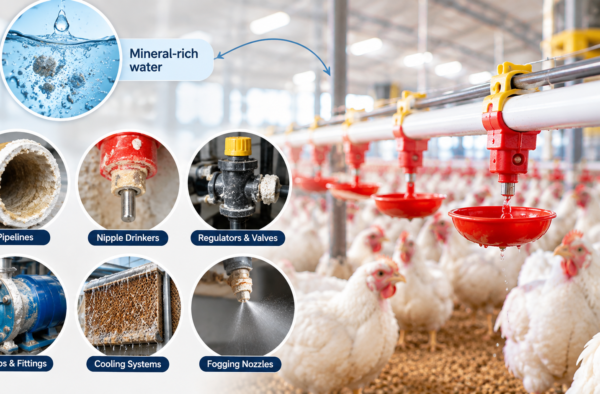
Hard water contains dissolved minerals such as calcium and magnesium. Over time, these minerals can contribute to deposits inside pipelines and water-system components.
As deposits accumulate, they can reduce the effective passage available for water and contribute to inconsistent flow.
For farms experiencing recurring scaling, an appropriate water-conditioning or scale-control system can form part of a preventive water-management strategy.
5. Inspect Nipple Drinkers
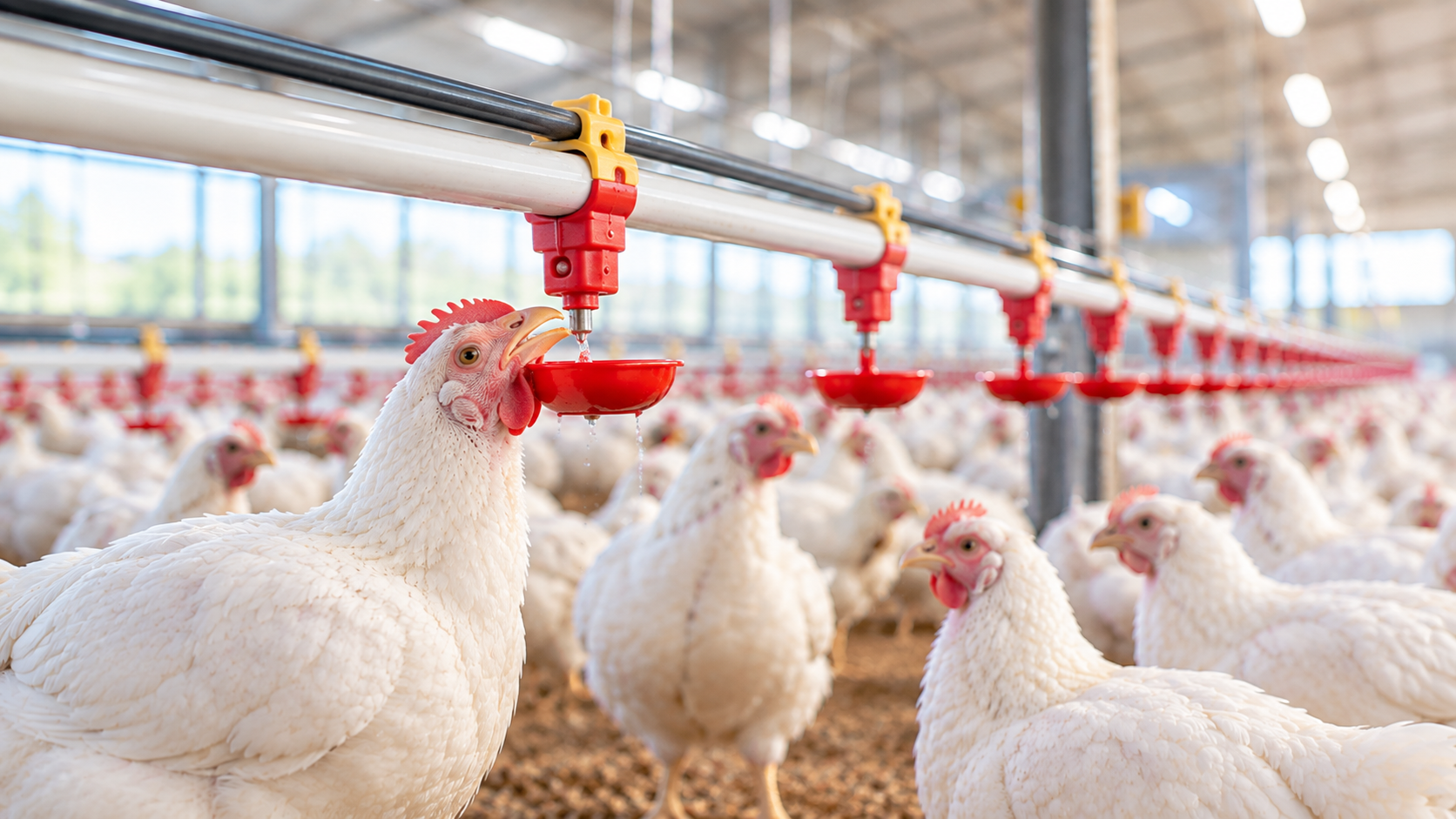
Nipple drinkers are small but important components of the water-delivery system.
Check them regularly for:
- Restricted flow
- Mineral deposits
- Leakage
- Physical damage
- Inconsistent operation
A problem at an individual nipple can sometimes indicate a wider water-system issue.
6. Keep Filters and Regulators in Good Condition
Filters and regulators influence how water enters and moves through the drinking system.
A clogged filter can restrict water flow, while a poorly functioning regulator can contribute to pressure variations.
Routine inspection and maintenance of these components can help maintain stable system performance.
7. Check for Air in the Lines
Air trapped inside a water line can interfere with consistent water movement.
Proper installation, line positioning, and system maintenance can help minimize air-related flow problems.
If unusual fluctuations appear after maintenance or system changes, checking for trapped air can be worthwhile.
8. Consider the Length of the Water Line
Long drinking lines naturally create additional challenges for maintaining consistent flow.
The system should be designed appropriately for:
- Line length
- Number of drinking points
- Water demand
- Pipe diameter
- Operating pressure
- Water-source capacity
A properly designed system makes it easier to maintain consistent water delivery throughout the poultry house.
9. Monitor Flow at Different Points
Checking only the beginning of a drinking line does not provide a complete picture.
Where practical, compare water flow at different sections of the system.
This can help identify whether the problem originates from:
- The water source
- The main pipeline
- Pressure regulation
- Mineral buildup
- A specific section of the drinking line
- Individual drinkers
Regular monitoring can help detect gradual changes before they become major operational issues.
How Hard Water Can Affect Water Flow
Hard water deserves particular attention because mineral deposits can develop gradually inside poultry drinking lines.
A pipeline may appear normal externally while deposits are accumulating internally.
Over time, this can contribute to:
Hard Water → Mineral Deposits → Reduced Internal Passage → Flow Restriction
For farms experiencing repeated scaling, addressing the water condition can be an important part of maintaining the drinking system.
Can Water Conditioning Help?
Water conditioning can be used as part of a broader strategy for managing hard-water-related scale.
MR WATER uses electrolysis-based water-conditioning technology designed to reduce the tendency of hardness-forming minerals to create persistent scale deposits.
This can be considered for poultry water systems where recurring mineral buildup is affecting pipelines and connected components.
Water conditioning does not replace regular flushing, cleaning, inspection, or proper system design. Instead, it can complement these practices as part of preventive scale management.
Poultry Water Flow Maintenance Checklist
Farm operators can regularly check:
☑ Water pressure
☑ Flow at different points of the line
☑ Nipple drinker operation
☑ Filters
☑ Regulators
☑ Pipeline condition
☑ Mineral deposits
☑ Leaks
☑ Air in the system
☑ Water-line flushing
☑ Overall water-system performance
Conclusion
Maintaining consistent water flow in poultry drinking lines requires attention to the complete water system.
Proper pressure, regular flushing, clean filters, functional regulators, well-maintained drinking components, and effective management of mineral buildup can all contribute to more reliable water delivery.
For farms dealing with recurring hard-water scaling, water conditioning can provide an additional preventive approach to help manage mineral deposits and support water-line performance.
A well-maintained drinking system helps keep water delivery consistent throughout the poultry house.
Consistent Flow. Better Water Management. A More Reliable Poultry Water System.