- October 1, 2026
How to Prevent Scale in Poultry Water Lines
Poultry water lines operate continuously, delivering water to birds throughout the production cycle. Over time, hard water can leave behind calcium and magnesium deposits that gradually build up inside pipelines and drinking-system components. How to Prevent Scale in Poultry Water Lines is therefore an important part of maintaining a reliable poultry water system.
Scale buildup can restrict water flow, affect nipple drinkers, and increase cleaning and maintenance requirements. A preventive approach can help poultry farms manage these problems before heavy deposits develop.
What Causes Scale in Poultry Water Lines?
Scale is mainly associated with hard water, which contains dissolved minerals such as calcium and magnesium.
As water repeatedly passes through pipelines, valves, regulators, and drinkers, these minerals can gradually deposit on internal surfaces.
Factors that can contribute to scaling include:
- High water hardness
- Mineral-rich borewell water
- Continuous water flow
- Changes in water conditions
- Long operating periods
- Poor scale management
Why Is Scale a Problem?
Even a thin layer of mineral buildup can become a larger problem over time.
Heavy scaling may contribute to:
- Restricted water flow
- Blocked nipple drinkers
- Reduced pipeline capacity
- Problems with valves and regulators
- Increased cleaning requirements
- Mineral deposits around water outlets
- Additional water-system maintenance
Because poultry water systems often contain narrow passages and small components, controlling scale is particularly important.
1. Test Your Farm's Water
The first step is understanding the water entering your poultry farm.
Regular testing can help identify:
- Water hardness
- TDS levels
- pH
- Mineral content
- Other water-quality parameters
Testing gives farmers a better understanding of whether hard water may be contributing to recurring scale problems.
2. Inspect Water Lines Regularly
Don’t wait for a blockage before checking the system.
Inspect pipelines, nipple drinkers, regulators, valves, and fittings for:
- White or chalky deposits
- Reduced water flow
- Blocked outlets
- Changes in water pressure
- Visible mineral buildup
Early detection makes scale management easier.
3. Maintain Proper Water-Line Cleaning
Regular cleaning and flushing can help remove accumulated deposits and other unwanted material from poultry water lines.
However, cleaning alone may not address the underlying tendency of hard water to create new scale.
That is why cleaning should be combined with appropriate scale-control measures.
4. Manage Hard Water at the Source
If hard water is repeatedly causing scaling, addressing the water condition itself can provide a more preventive approach.
Depending on the water characteristics and farm requirements, poultry farms may consider suitable water-conditioning or scale-control systems.
These systems can help manage the tendency of hardness-forming minerals to create persistent deposits.
5. Pay Attention to Nipple Drinkers
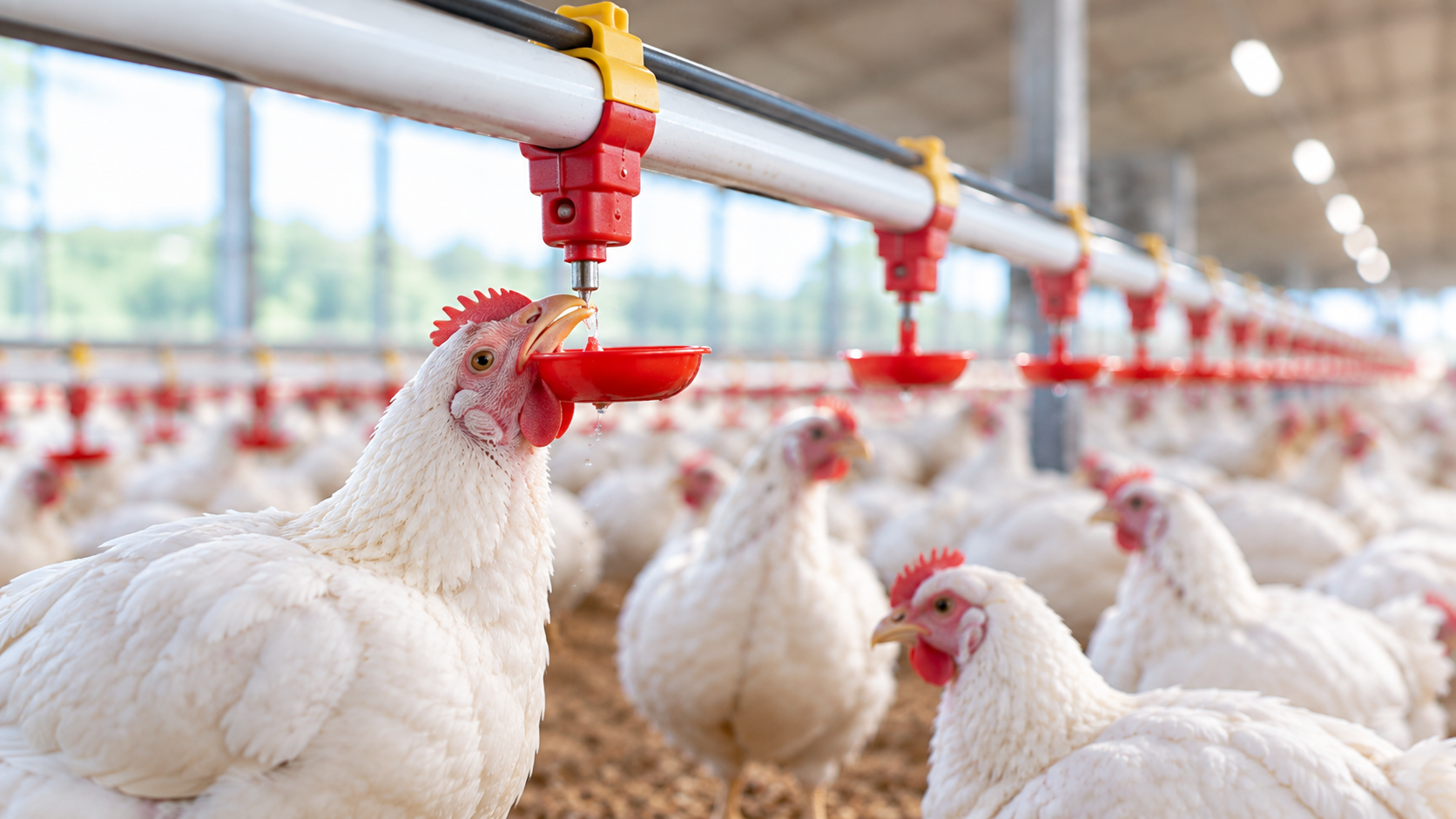
Nipple drinkers have small internal passages and moving components, making them sensitive to mineral deposits.
Regularly check for:
- Reduced water delivery
- Partially blocked nipples
- Mineral deposits
- Irregular flow
- Dripping or malfunctioning components
Keeping the drinking system properly maintained can help prevent small problems from becoming widespread.
6. Consider Water Conditioning
For farms experiencing recurring hard-water scaling, a suitable poultry water conditioning system can form part of a preventive strategy.
MR WATER uses electrolysis-based technology designed to help manage the scaling tendency of hardness-causing minerals without conventional salt-based regeneration or chemical dosing.
The objective is to help control scale formation throughout poultry water infrastructure rather than repeatedly dealing with individual scaled components.
Where Can Scale Develop?
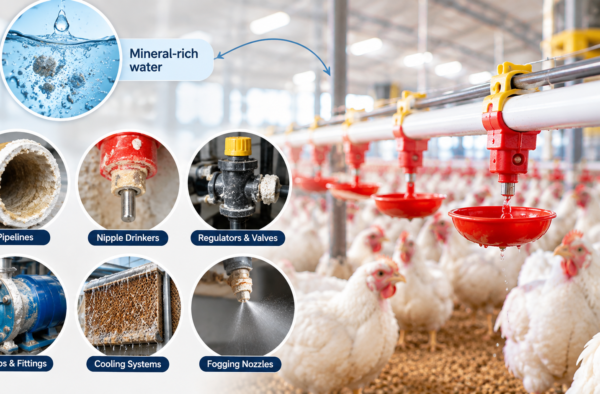
Scale is not limited to the main pipeline. It can develop throughout the water system, including:
- Water pipelines
- Nipple drinkers
- Valves
- Regulators
- Filters
- Pumps
- Fittings
- Cooling systems
- Fogging nozzles
- Storage and distribution equipment
A complete scale-management approach should therefore consider the entire water network.
A Better Approach to Poultry Water-Line Scale
Preventing scale is easier when farms follow a consistent process:
Test → Monitor → Clean → Condition → Inspect
Water testing identifies the problem, regular inspection detects buildup, cleaning manages existing deposits, and appropriate conditioning can help control recurring mineral scaling.
Water conditioning should not replace proper cleaning or water hygiene. Instead, it can complement a broader poultry water-management program.
Conclusion
How to Prevent Scale in Poultry Water Lines starts with understanding the farm’s water and identifying the factors contributing to mineral buildup.
Regular testing, water-line maintenance, nipple-drinker inspection, proper cleaning, and suitable scale-control technology can help poultry farms maintain more reliable water systems.
By managing hard-water scaling proactively, farms can help protect pipelines and drinking-system components while reducing recurring scale-related maintenance.
Control Scale. Protect Water Lines. Keep Your Poultry Water System Performing.