
- September 2, 2026
Low Water Intake in Poultry: Causes and Solutions
Water is essential for poultry birds at every stage of growth. Birds need consistent access to suitable-quality water for normal body functions, digestion, temperature regulation, and daily activity.
When birds suddenly start drinking less water, it can be a sign that something in the farm environment, drinking system, or water supply needs attention.
Understanding the causes of low water intake in poultry can help farmers identify problems early and maintain better water management across the farm.
Why Is Water Intake Important in Poultry?
Poultry birds depend on water throughout the day. Water intake is also closely associated with feed consumption and normal flock activity.
A change in drinking behavior can therefore be an important observation for poultry farmers.
Low water consumption does not always have one single cause. Factors such as water quality, temperature, drinker performance, water availability, environmental conditions, feed, and flock health can all influence how much birds drink.
Common Causes of Low Water Intake in Poultry
1. Poor Water Quality
One of the most common factors to investigate is the quality of the drinking water.
Water containing excessive minerals, unpleasant taste, contaminants, or other quality issues may affect drinking behavior.
This is why regularly monitoring water quality should be an important part of poultry farm management.
Parameters such as TDS, pH, hardness, and microbial quality can provide useful information about the condition of the water.
2. Hard Water and Excessive Minerals
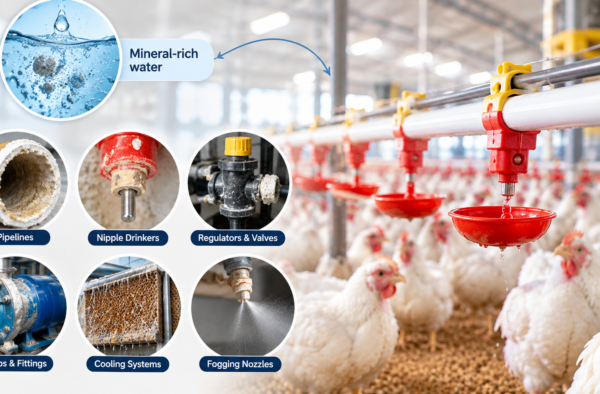
Hard water contains dissolved minerals such as calcium and magnesium. Although the effect of water hardness depends on the overall water chemistry and farm conditions, excessive mineral content can create problems within the drinking-water system.
Mineral deposits can gradually accumulate inside:
- Water pipelines
- Nipple drinkers
- Fittings
- Storage tanks
- Valves
This buildup can reduce water flow and affect the performance of drinking equipment.
3. Blocked or Poorly Functioning Drinkers
Birds need easy access to water.
If nipple drinkers are blocked, leaking, damaged, or delivering insufficient water, birds may not receive the amount of water they need.
Regularly checking drinkers can help identify:
- Blocked nipples
- Low water pressure
- Uneven water flow
- Leaking connections
- Mineral deposits
- Damaged components
A drinking system that looks functional from a distance may still have individual points where water delivery is inadequate.
4. High Water Temperature
Water temperature can influence drinking behavior, particularly during hot weather.
Poultry farms exposed to high temperatures need to pay attention to both the birds’ environment and the temperature of water reaching the drinkers.
During hot conditions, farmers should ensure that water remains readily available and that the drinking system is functioning properly.
5. Water-Line Problems
The condition of the water lines can have a direct effect on water availability.
Sediment, mineral deposits, biofilm, and other buildup can accumulate inside pipelines over time.
This may contribute to restricted water flow and uneven delivery throughout the house.
Regular inspection and appropriate flushing and sanitation practices are therefore important parts of poultry water management.
6. Poor Water Accessibility
Even when the water itself is good quality, birds may drink less if access to water is restricted.
Possible causes include:
- Incorrect drinker height
- Inadequate drinker availability
- Poor water pressure
- Blocked drinkers
- Uneven distribution of drinkers
- Equipment malfunction
The drinking system should be checked regularly to ensure that birds can access water easily throughout the poultry house.
7. Environmental Stress
Temperature, humidity, ventilation, stocking conditions, and other environmental factors can influence poultry drinking behavior.
Birds may change their water consumption when environmental conditions change.
Therefore, a sudden change in water intake should be considered alongside other farm observations rather than viewed in isolation.
8. Feed or Management Changes
Changes in feed composition, feeding schedules, supplements, medications, or general farm management may also affect water consumption.
Whenever water intake changes unexpectedly, farmers should review recent changes in both feed and farm management.
9. Flock Health
A sudden or persistent change in water consumption can sometimes be associated with flock health issues.
Farmers should pay attention to other signs, including changes in feed intake, activity, droppings, growth, or general flock behavior.
If reduced water intake is sudden, significant, or accompanied by other concerning signs, consultation with a qualified poultry veterinarian is recommended.
How to Identify Low Water Intake in Poultry
Monitoring daily water consumption is one of the simplest ways to identify changes early.
Farmers can compare current water consumption with the flock’s normal pattern while considering factors such as:
- Bird age
- Number of birds
- Weather conditions
- Feed consumption
- Housing conditions
- Production stage
A sudden deviation from the farm’s normal pattern deserves investigation.
It is also useful to inspect the drinking system rather than assuming that the issue is caused by the birds.
How to Improve Water Intake in Poultry
Once the possible cause has been identified, farmers can take appropriate corrective action.
Check Water Quality
Test the water periodically and monitor important parameters such as TDS, pH, hardness, and microbial quality.
Maintain Water Lines
Inspect and clean water lines according to an appropriate farm sanitation and maintenance program.
Check Nipple Drinkers
Make sure drinkers are clean, functional, correctly positioned, and providing adequate water flow.
Monitor Water Consumption
Keep records of daily water consumption so that unusual changes can be detected quickly.
Maintain Suitable Farm Conditions
Good ventilation, appropriate temperature management, and proper housing conditions can support normal drinking behavior.
Address Hard-Water Scale
Where hard water is causing persistent mineral buildup, appropriate water-conditioning methods can help manage scale formation and protect the drinking-water infrastructure.
Can Water Conditioning Help?
Water conditioning can be considered when mineral content and hard-water scale are creating recurring problems in poultry water systems.
MR WATER Anti-Scale X is designed to help control hard-water scale using electrolysis-based technology without adding conventional chemicals or salt. It can help protect water lines and drinking equipment from scale-related buildup.
For poultry farms, water conditioning should be considered as part of a broader water-management program that includes testing, sanitation, regular inspection, and proper equipment maintenance.
What Farmers Should Remember
Low water intake in poultry should not be ignored, particularly when the change is sudden or persistent.
Instead of looking for only one cause, farmers should examine the entire water system:
Water Source → Storage → Water Lines → Drinkers → Birds
Problems at any stage can potentially affect the amount and quality of water reaching the flock.
Regular monitoring can help farmers identify issues before they become larger farm-management problems.
Frequently Asked Questions
What causes low water intake in poultry?
Low water intake can have several causes, including poor water quality, hard water, blocked drinkers, inadequate water flow, high water temperature, environmental stress, management changes, and flock health issues.
Can hard water reduce poultry water intake?
Hard water can contribute to mineral buildup in water lines and drinking equipment. If scale affects water flow or drinker performance, it may indirectly affect water availability to birds.
How can poultry farmers monitor water intake?
Farmers can record daily water consumption and compare it with the flock’s normal pattern while considering bird age, weather, feed intake, and housing conditions.
Why should poultry water lines be cleaned?
Cleaning and maintaining water lines can help manage sediment, biofilm, mineral deposits, and other buildup that may interfere with water flow and drinking-system performance.
What should I do if birds suddenly stop drinking normally?
Check water availability, drinkers, water pressure, water quality, environmental conditions, and recent management changes. If the reduction is significant or accompanied by other signs of illness, seek professional veterinary advice.
Conclusion
Water intake is an important part of poultry farm management. When birds drink less than expected, the cause may be related to water quality, hard-water scale, drinking equipment, environmental conditions, management changes, or flock health.
By monitoring low water intake in poultry, regularly checking water quality, and maintaining the complete drinking-water system, farmers can identify potential problems earlier and keep water consistently available to the flock.
Good Water Management Starts with Understanding What Your Birds Are Drinking.