- July 20, 2026
How to Check Hard Water at Home Without a Water Test Kit
Many homeowners don’t realize they have hard water until they notice white stains on taps, dry skin, or frequent appliance repairs. Fortunately, you don’t always need a professional inspection or a water test kit to identify the problem.
If you’re wondering how to check hard water at home, there are several simple signs that can help you detect it. From limescale buildup on bathroom fittings to poor soap lather and reduced water flow, these everyday clues can reveal whether your home’s water contains excess minerals.
In this guide, you’ll learn how to identify hard water without a test kit, understand its impact on your home, and discover practical solutions to protect your plumbing, appliances, and daily water use.
What Is Hard Water?
Hard water contains high levels of naturally occurring minerals, mainly calcium and magnesium. As water passes through underground rocks and soil, it absorbs these minerals before reaching your home.
Although these minerals are harmless in most cases, they leave behind limescale deposits that can affect your plumbing system, appliances, and even your daily routine.
7 Signs Your Home Has Hard Water
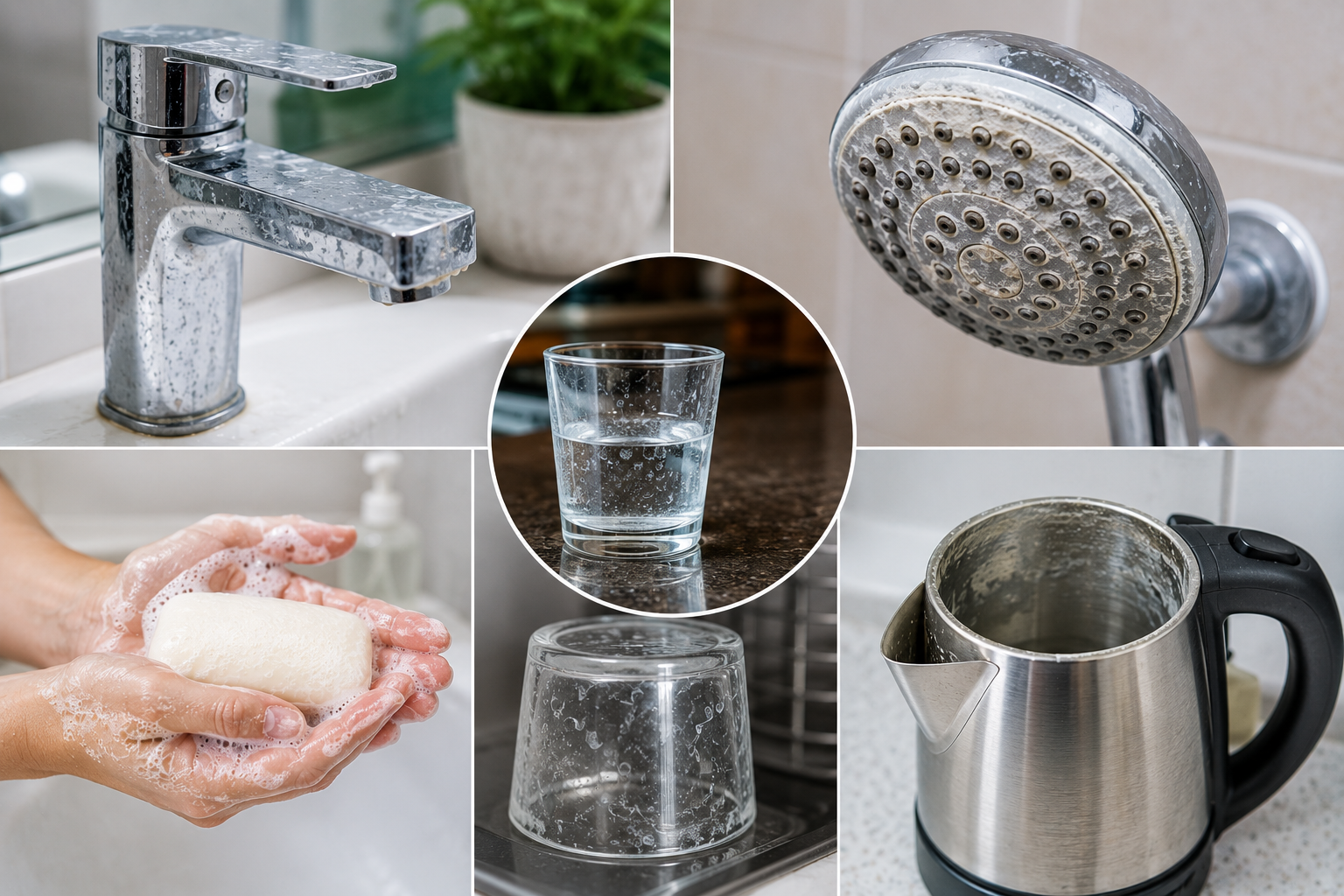
1. White Stains on Taps and Faucets
One of the easiest ways to identify hard water is by checking your taps, showerheads, and bathroom fittings.
If you notice white or chalky deposits, they’re likely mineral residues left behind after the water evaporates.
2. Soap Doesn’t Lather Easily
Does your soap or shampoo require more effort to produce foam?
Hard water reacts with soap, making it difficult to create a rich lather. As a result, you may end up using more soap than usual.
3. Dry Skin and Frizzy Hair After Bathing
If your skin feels tight after a shower or your hair becomes rough and difficult to manage, hard water may be the reason.
Minerals left behind on the skin and hair can reduce moisture and make personal care products less effective.
4. White Spots on Glassware and Utensils
After washing dishes, check your glasses, plates, or stainless-steel utensils.
White spots or cloudy marks are often a clear sign of mineral deposits caused by hard water.
5. Reduced Water Flow
Hard water causes scale buildup inside pipes, taps, and showerheads.
Over time, these deposits restrict water flow, resulting in lower water pressure throughout your home.
6. Your Geyser or Washing Machine Isn’t Performing Well
If your geyser takes longer to heat water or your washing machine doesn’t clean clothes as effectively as before, hard water may be affecting the internal components.
Mineral buildup can reduce efficiency and increase maintenance requirements.
7. Frequent Scale Buildup Around Your Home
Take a look at kettles, bathroom tiles, showerheads, and kitchen sinks.
If you’re constantly cleaning white mineral deposits, your home is likely receiving hard water.
A Simple Home Test Without a Kit
You can perform a quick soap test using a clean bottle.
Here’s how:
- Fill a transparent bottle halfway with tap water.
- Add a few drops of liquid soap.
- Shake the bottle well.
Results
- Lots of bubbles and clear water: Water is likely softer.
- Very little foam with cloudy water: Your home may have hard water.
While this isn’t a scientific measurement, it’s a simple way to identify potential hard water issues.
Why You Shouldn't Ignore Hard Water
Hard water problems usually develop slowly, but they can become expensive over time.
Ignoring hard water may lead to:
- Limescale buildup in pipes
- Reduced appliance efficiency
- Higher electricity bills
- Frequent plumbing repairs
- Shorter lifespan of geysers and washing machines
- Dry skin and dull hair
Taking action early can help protect both your home and your appliances.
How to Reduce Hard Water Problems
If you’ve noticed several of these signs, it’s worth considering a long-term solution.
Regular cleaning may remove visible scale, but it doesn’t stop new deposits from forming.
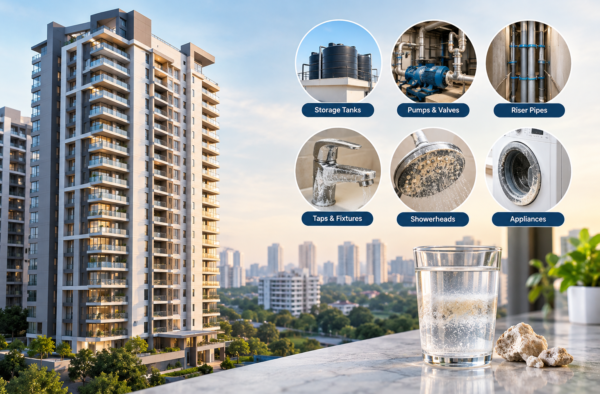
A water conditioning system helps reduce scale buildup throughout your home’s plumbing, protecting appliances such as geysers, washing machines, taps, showerheads, and pipelines.
Why Choose MR WATER Anti-Scale X?
MR WATER Anti-Scale X is an advanced water conditioning solution designed to help reduce the effects of hard water without adding chemicals or salts.
Using advanced electrolysis-based technology, it helps minimize scale formation in household plumbing and appliances, improving efficiency while reducing maintenance needs.
Key Benefits
- Helps reduce limescale buildup
- Protects household appliances
- Supports better water flow
- Improves appliance efficiency
- Chemical-free operation
- Eco-friendly technology
- Low maintenance
- Suitable for Indian water conditions
Conclusion
Knowing how to check if your home has hard water without a water test kit can help you spot problems before they become costly. Simple signs like white stains, poor soap lather, reduced water flow, and frequent scale buildup often indicate that your water contains excess minerals.
If you notice these warning signs, investing in a reliable water conditioning solution can help protect your plumbing, appliances, and everyday comfort for years to come.
Frequently Asked Questions
How can I tell if I have hard water without a test kit?
Look for white mineral deposits on taps, poor soap lather, dry skin, frizzy hair, cloudy glassware, and reduced water pressure. These are common signs of hard water.
Does hard water damage household appliances?
Yes. Hard water can cause limescale buildup inside geysers, washing machines, pipes, and other appliances, reducing their efficiency and lifespan.
Is the soap bottle test reliable?
The soap bottle test is a simple indicator of water hardness, but it doesn’t measure the exact hardness level. For accurate results, a professional water test is recommended.
What is the best solution for hard water?
A water conditioning system helps reduce scale buildup, protects household appliances, and lowers long-term maintenance costs.
Does MR WATER Anti-Scale X remove minerals from water?
MR WATER Anti-Scale X is designed to help reduce scale formation without adding chemicals or salts, helping protect your plumbing and appliances.