- October 25, 2026
Hard Water in Villas: Managing Multiple Floors
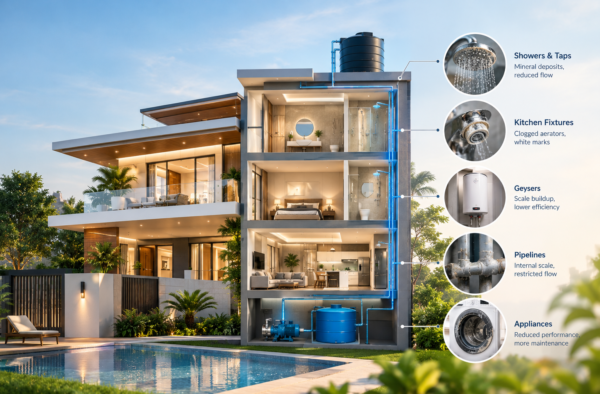
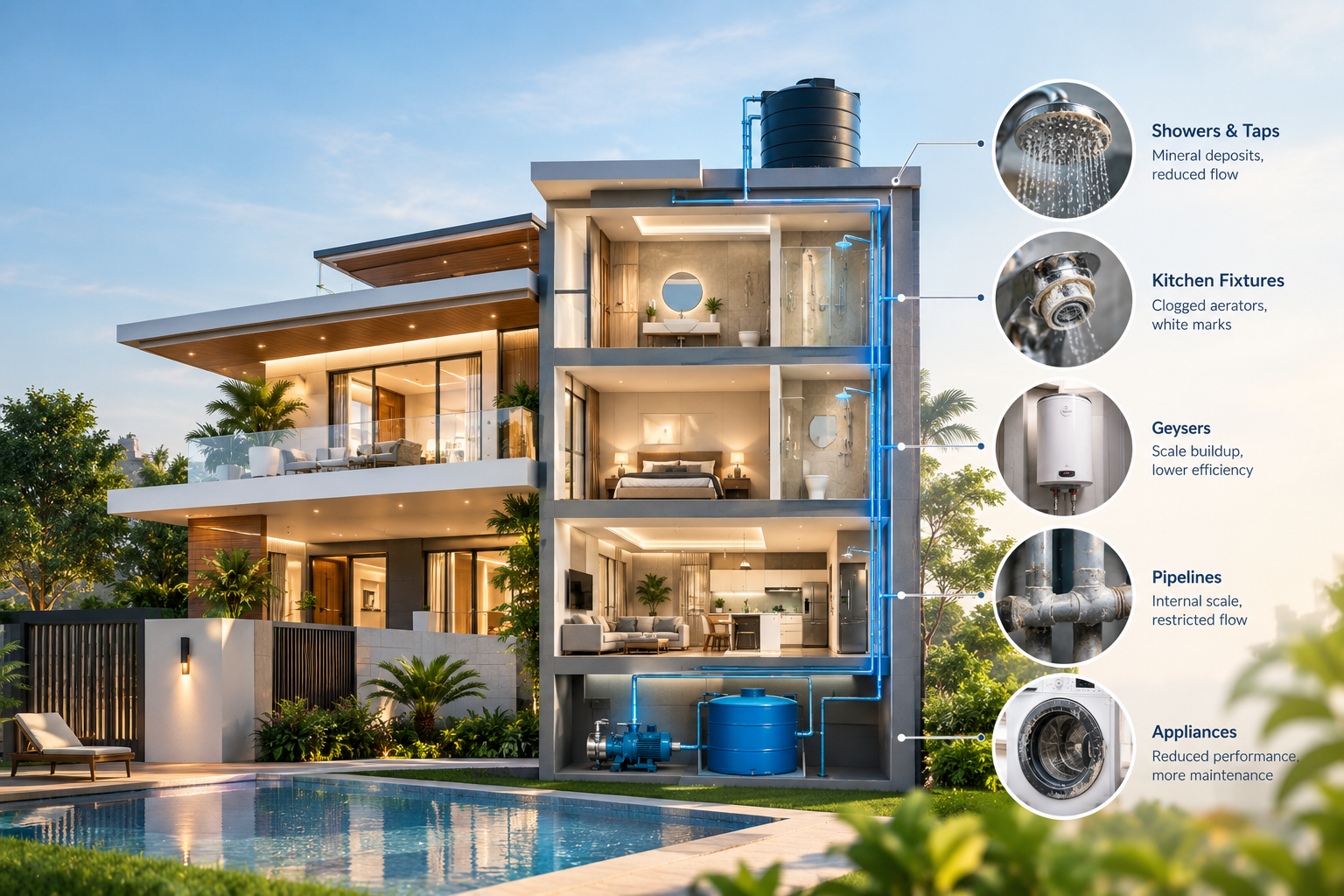
In a duplex or villa, water travels through multiple levels, tanks, pumps, pipelines, bathrooms, kitchens, and appliances before reaching the point of use. When hard water in villas becomes an issue, mineral deposits can gradually affect different parts of the home’s water system.
Unlike apartments with a shared building-wide water system, independent villas and duplexes often have their own storage and distribution arrangements. This makes understanding how water moves through the property important for effective hard-water management.
Why Hard Water Can Be Different in Multi-Floor Homes
A duplex or villa may have:
- Underground or overhead water storage tanks
- Booster or pressure pumps
- Long vertical and horizontal pipelines
- Multiple bathrooms and kitchens
- Geysers and other water-connected appliances
- Different water outlets across floors
Hard water contains dissolved minerals such as calcium and magnesium. As water moves through the system, these minerals can contribute to deposits on surfaces and inside components.
Where Hard Water Problems Can Appear
1. Upper-Floor Bathrooms
Showerheads, taps, mixers, and other fixtures on upper floors can develop visible mineral deposits over time. Reduced water flow through small openings may also become noticeable when deposits accumulate.
2. Kitchen Fixtures
Kitchen faucet aerators and other small components can collect mineral deposits. This may affect the smooth flow of water and make regular cleaning more difficult.
3. Geysers and Hot-Water Systems
Heating water can encourage mineral deposits to form on components exposed to water. In areas with hard water, this can become an important consideration for households using multiple geysers.
4. Long Water Pipelines
Duplexes and villas can have considerably longer distribution lines than smaller homes. Mineral deposits may gradually accumulate in pipes, fittings, valves, and other water-contact components.
Does Every Floor Experience the Same Hard-Water Problem?
Not necessarily.
The water entering the property may have broadly similar mineral characteristics, but the effects of hard water can vary between floors and outlets.
Differences in pipe length, water temperature, flow rate, pressure, usage patterns, and fixture design can influence where deposits become more noticeable.
Therefore, if one bathroom appears to have more scale than another, it does not automatically mean that the water hardness is different on each floor. Water testing can help determine the actual water quality.
The Role of Water Pressure and Distribution
Water pressure becomes particularly important in multi-floor homes.
Upper floors may require adequate pressure to deliver water consistently, while pumps and pressure-control components need to operate correctly. Mineral deposits around valves, fittings, and other components can make system maintenance more difficult over time.
A well-maintained distribution system should therefore consider both water pressure and water quality.
How to Manage Hard Water Across Multiple Floors
Check the Water Source
Start by understanding where the home’s water comes from. Borewell water, municipal supplies, tanker water, and mixed sources can have different mineral characteristics.
Test Before Choosing a Solution
Water hardness, TDS, pH, and other relevant parameters should be checked before selecting a treatment or conditioning approach.
Inspect Different Floors
Check frequently used bathrooms, kitchens, showerheads, taps, and other outlets for recurring mineral deposits.
Maintain Storage Tanks and Pipelines
Regular cleaning and inspection of tanks, filters, pumps, valves, and pipelines remain important regardless of the water-conditioning method used.
Consider Whole-Home Water Conditioning
For homes experiencing persistent scale-related issues, a whole-home conditioning approach can help address the water before it reaches multiple floors and outlets.
Can Water Conditioning Help Villas and Duplexes?
Water conditioning can be considered when the primary concern is hard-water scale.
Solutions such as MR WATER Anti Scale X are designed to help manage scale-forming minerals as water passes through the system. Its electrolysis-based conditioning technology is intended to reduce the tendency of hardness minerals to form persistent scale without conventional salt-based regeneration or chemical dosing.
However, water conditioning is not a replacement for filtration, purification, sanitation, water testing, or regular maintenance. The appropriate solution depends on the home’s water source and water-quality requirements.
A Practical Hard-Water Checklist for Villas
Homeowners can periodically check:
- Water hardness and overall water quality
- Storage tank condition
- Pump and pressure performance
- Showerhead and faucet deposits
- Geyser performance
- Pipeline and valve condition
- Recurring white mineral deposits
- Water flow from different floors
- Maintenance requirements for connected appliances
Conclusion
Managing hard water in villas requires looking at the entire water distribution system rather than focusing on a single bathroom or appliance. In duplexes and multi-floor homes, water travels through several interconnected components, making regular inspection and proper water management especially valuable.
By understanding the water source, monitoring water quality, maintaining the distribution system, and considering suitable conditioning solutions, homeowners can better manage hard-water scale throughout the property.