
- September 2, 2026
Water Quality and Poultry Health: What Farmers Should Know
When managing a poultry farm, most attention naturally goes toward feed, housing, temperature, ventilation, and flock management. But one essential factor is sometimes overlooked: water quality.
Poultry birds consume water throughout the day, making the quality and availability of drinking water an important part of farm management. Poor-quality water can affect drinking behavior, water-line hygiene, equipment performance, and the overall environment in which birds are raised.
Understanding the connection between water quality and poultry health can help farmers identify potential problems early and maintain a more reliable drinking-water system.
Why Is Water Important for Poultry Health?
Water plays an essential role in normal physiological processes, including digestion, nutrient utilization, temperature regulation, and hydration.
Birds also need continuous access to suitable-quality drinking water. If water quality or availability changes, birds may alter their drinking behavior.
For this reason, water should be monitored with the same attention given to other important aspects of poultry management.
How Water Quality Can Influence Poultry Health
1. Poor Water Quality Can Affect Water Intake
Birds may change their drinking behavior when water has an unusual taste, odor, excessive mineral content, or other quality issues.
Reduced water intake can become a management concern because water consumption is closely associated with normal feeding and flock activity.
When water intake changes unexpectedly, farmers should investigate the water source and drinking system along with other possible causes.
2. Hard Water Can Create Problems in Drinking Systems
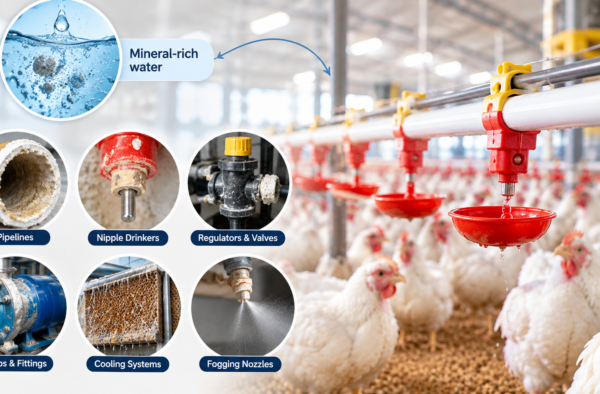
Hard water contains dissolved minerals, particularly calcium and magnesium.
Over time, these minerals can contribute to scale formation inside:
- Water lines
- Nipple drinkers
- Valves
- Fittings
- Storage tanks
As deposits accumulate, they may restrict water flow or affect the performance of drinking equipment.
This can make it more difficult to maintain consistent water availability throughout the poultry house.
3. Water Contamination Can Be a Concern
Water can become contaminated at its source or while passing through storage tanks and distribution lines.
Poorly maintained water systems can provide conditions where unwanted microbial growth and biofilm may develop.
Therefore, maintaining clean storage tanks and water lines is an important part of poultry water management.
Regular water testing can help farmers understand the quality of their water and determine whether corrective action is needed.
Important Water Quality Parameters for Poultry Farms
Water quality cannot be evaluated using only one measurement. Several parameters can provide useful information about the condition of drinking water.
TDS
Total Dissolved Solids (TDS) indicate the concentration of dissolved substances in water. Monitoring TDS can help farmers identify changes in the mineral composition of their water source.
pH
pH is another important water-quality parameter. Water chemistry can influence equipment, sanitation procedures, and the overall management of the drinking-water system.
Water Hardness
Hardness is primarily associated with minerals such as calcium and magnesium. Excessive hardness can contribute to mineral scale formation in poultry water lines and drinking equipment.
Microbial Quality
Microbiological testing can help identify potential contamination in the water supply. Testing requirements should be determined based on the farm’s water source, local conditions, and professional recommendations.
Water Quality and the Poultry Drinking System
The quality of water reaching the birds depends on more than the original water source.
Consider the complete path:
Water Source → Storage Tank → Water Lines → Drinkers → Birds
Water that starts out in good condition can potentially be affected by problems within storage tanks or distribution lines.
For example, sediment or mineral deposits inside a pipeline can affect water flow. Poorly maintained tanks or lines can also create water-quality concerns.
That is why regular inspection of the complete drinking system is essential.
How Poor Water Quality Can Affect Farm Management
The impact of poor water quality can extend beyond the birds.
Mineral deposits and water-line contamination can increase the need for cleaning and maintenance. Blocked drinkers, restricted water flow, and damaged components can also create additional work for farm staff.
Over time, these issues may contribute to:
- More frequent water-line cleaning
- Increased equipment maintenance
- Higher replacement requirements
- Uneven water delivery
- Greater attention to sanitation
Maintaining water quality can therefore support both flock management and efficient farm operations.
How Can Poultry Farmers Improve Water Quality?
A practical water-management program should address both the water itself and the equipment that delivers it.
1. Test the Water Regularly
Periodically test the water based on the farm’s water source and conditions. Important parameters may include TDS, pH, hardness, and microbial quality.
2. Keep Storage Tanks Clean
Storage tanks should be inspected and cleaned as part of a suitable farm sanitation program.
3. Maintain Water Lines
Regularly inspect pipelines for sediment, mineral deposits, biofilm, leaks, and other issues that may affect water delivery.
4. Check Nipple Drinkers
Make sure drinkers are operating correctly and providing consistent water flow.
5. Monitor Water Consumption
Keeping records of water consumption can help farmers notice unusual changes early.
6. Manage Hard-Water Scale
Where hard water is creating recurring scale problems, suitable water-conditioning methods can be considered to help manage mineral buildup in the drinking system.
Can Water Conditioning Support Poultry Water Management?
For farms dealing with recurring hard-water scale, water conditioning can be one part of a broader water-management strategy.
MR WATER Anti-Scale X uses electrolysis-based technology designed to help control hard-water scale without adding conventional chemicals or salt. It is intended to help protect water lines and equipment from scale-related buildup.
However, water conditioning should not replace proper water testing, sanitation, cleaning, or veterinary guidance. The right approach depends on the farm’s specific water chemistry and operating conditions.
Signs That Your Poultry Water System Needs Attention
Farmers should pay attention to changes such as:
- Unexpected reduction in water consumption
- Changes in drinking behavior
- Reduced water flow from drinkers
- Frequent blocked nipples
- Visible scale around fittings
- Sediment in tanks or lines
- Unusual water odor or appearance
- Increasing water-system maintenance
These signs do not necessarily indicate a health problem by themselves, but they can signal that the water system needs to be investigated.
Water Quality and Poultry Health: A Complete Approach
Good water quality and poultry health management requires looking at the entire system rather than focusing on a single parameter.
Farmers should consider:
Water Quality + Water Availability + Water-Line Hygiene + Drinker Performance + Farm Environment
Together, these factors help provide birds with reliable access to suitable-quality drinking water.
If birds show persistent changes in drinking, feeding, behavior, or other signs of illness, professional veterinary advice should be obtained rather than assuming water quality is the only cause.
Frequently Asked Questions
How does water quality influence poultry health?
Water quality can influence drinking behavior, hydration, water-line hygiene, and overall flock management. Poor-quality or contaminated water may create additional challenges for maintaining a healthy poultry environment.
Can hard water affect poultry birds?
Hard water primarily creates concerns through mineral buildup in water lines and drinking equipment. If scale affects water flow or drinker performance, it can interfere with reliable water availability.
What water parameters should poultry farmers monitor?
Common parameters include TDS, pH, hardness, and microbial quality. The appropriate testing program depends on the farm’s water source and conditions.
Can contaminated water make poultry sick?
Contaminated drinking water can be a potential health concern. If contamination is suspected, the water should be tested and appropriate veterinary and water-quality professionals should be consulted.
How often should poultry water lines be cleaned?
Cleaning frequency depends on water quality, equipment, farm conditions, and the farm’s sanitation program. Regular inspection helps determine when cleaning or flushing is necessary.
Conclusion
Water is a fundamental part of poultry farming, and its importance goes beyond simply keeping birds hydrated.
Poor water quality can affect drinking behavior, water-line performance, sanitation, and farm maintenance. Hard water can also contribute to mineral scale that affects pipelines and drinking equipment.
By regularly monitoring water quality and poultry health, maintaining water lines and storage systems, and addressing water-quality problems early, poultry farmers can build a more reliable water-management system.
Clean Water. Reliable Water Systems. Better Poultry Management.