- July 8, 2026
Hard Water Problems at Home: Signs, Causes & Best Solutions
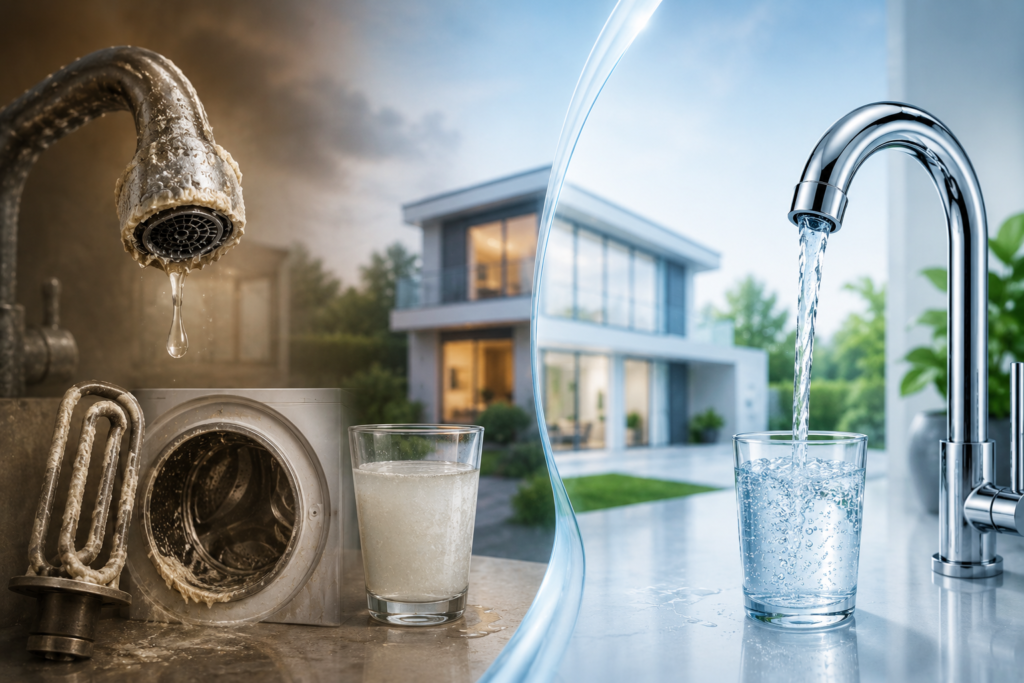
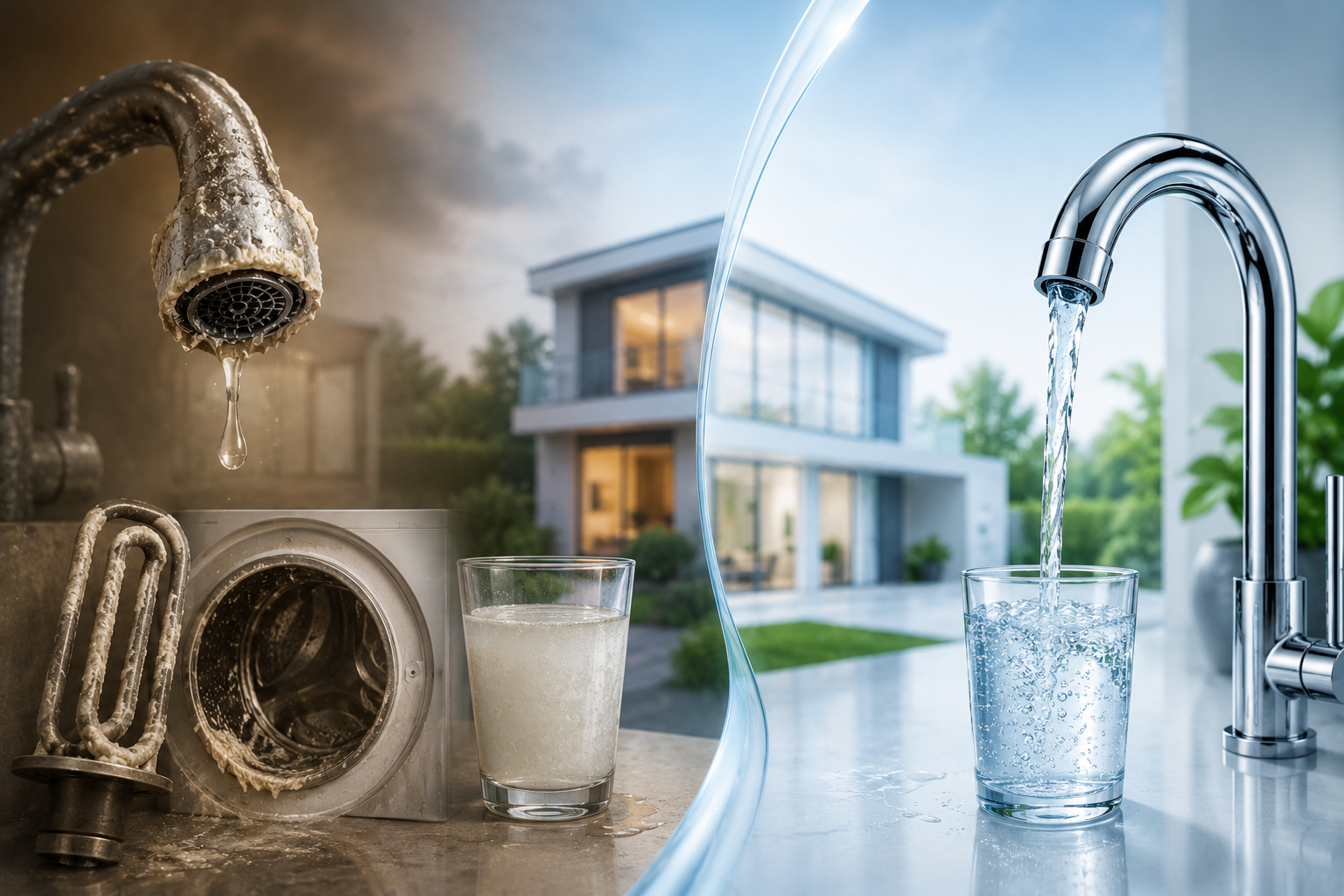
Have you noticed white stains on your bathroom taps, cloudy glassware, or dry skin after every shower?
These are some of the most common hard water problems at home. Although hard water is generally safe to drink, it can silently damage your plumbing, household appliances, and even your daily comfort.
Many homeowners don’t realize that hard water gradually reduces the lifespan of geysers, washing machines, pipelines, and bathroom fixtures. Over time, these hidden issues can lead to expensive repairs and higher electricity bills.
The good news is that hard water problems are preventable.
In this comprehensive guide, you’ll learn:
- What hard water is
- How to identify it
- Common warning signs
- Hidden costs of ignoring it
- The best hard water treatment options
- Why modern salt-free technologies like Mr. Water Anti Scale X are becoming a preferred choice for Indian homes
Whether your home relies on municipal water or borewell water, this guide will help you choose the right solution.
Quick Answer: What Are Hard Water Problems?
Hard water problems occur when water contains excessive calcium and magnesium minerals.
These minerals leave behind stubborn limescale deposits that can:
- Damage plumbing
- Reduce appliance efficiency
- Increase electricity bills
- Cause dry skin and rough hair
- Make soap and detergent less effective
- Leave white stains on taps and bathroom fittings
Fortunately, the right water treatment system can significantly reduce these issues and help protect your home.
What Is Hard Water?
Hard water is water that contains high levels of dissolved minerals, mainly:
- Calcium
- Magnesium
These minerals naturally dissolve into groundwater as rainwater passes through rocks and soil.
Unlike contaminated water, hard water is not considered unsafe for drinking. In fact, calcium and magnesium are essential minerals for the human body.
However, the real problem begins inside your home.
Every time hard water flows through your plumbing system, it leaves tiny mineral deposits behind. As months pass, these deposits build into a hard white layer called limescale.
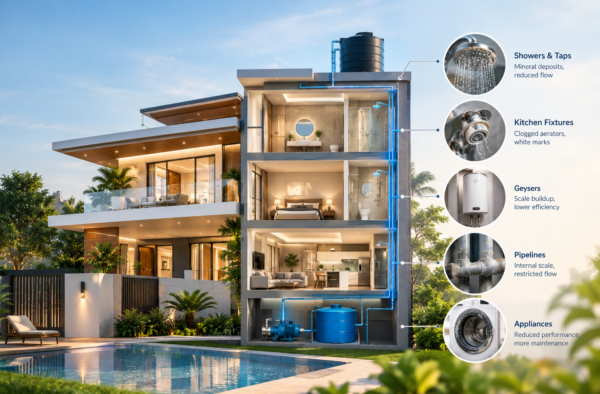
Limescale affects almost everything that comes into contact with water, including:
- Pipes
- Bathroom fittings
- Shower heads
- Washing machines
- Geysers
- Water heaters
- Kitchen taps
- Dishwashers
- Water purifiers
The harder the water, the faster this buildup occurs.
Why Is Hard Water So Common in India?
Many Indian cities depend heavily on groundwater and borewell water, which naturally contain high concentrations of dissolved minerals.
Areas with rocky geological formations usually experience higher water hardness.
Some regions commonly affected include:
- Hyderabad
- Bengaluru
- Chennai
- Pune
- Ahmedabad
- Jaipur
- Delhi NCR
Independent houses and gated communities that use borewell water often experience much higher hardness levels than homes connected to treated municipal water supplies.
If your home receives borewell water, testing your water hardness is highly recommended.
What Causes Hard Water?
Hard water develops naturally.
As rainwater travels underground, it dissolves minerals from limestone, chalk, and other mineral-rich rocks.
The water then carries these dissolved minerals into underground aquifers and borewells.
When this mineral-rich water reaches your home, the calcium and magnesium remain dissolved.
However, whenever water:
- heats up,
- evaporates,
- or stays stagnant,
these minerals crystallize into hard deposits known as limescale.
This is why scale buildup is most commonly found inside:
- Geysers
- Electric kettles
- Water heaters
- Pipelines
- Shower heads
7 Warning Signs of Hard Water at Home
Many homeowners live with hard water for years without realizing the real cause of their household problems.
Here are the most common warning signs.
1. White Stains on Taps and Bathroom Fixtures
The easiest sign to notice is the white or chalky residue around taps, showerheads, and sinks.
These deposits are made of calcium carbonate, commonly known as limescale.
Over time, the stains become difficult to remove and can permanently affect the appearance of bathroom fittings.
Suggested Image
Bathroom tap covered with white limescale.
ALT Text
“White limescale deposits caused by hard water on a bathroom tap.”
2. Soap Doesn’t Lather Properly
Do you find yourself using extra soap or shampoo every day?
Hard water reacts with soap to form soap scum instead of rich lather.
As a result:
- You use more shampoo.
- More detergent is needed.
- Dishes become harder to clean.
- Bathing feels less refreshing.
This also increases your monthly household expenses.
3. Dry Skin and Rough Hair
Hard water leaves behind a thin mineral layer on your skin and hair.
This layer prevents moisture from being absorbed properly.
Common symptoms include:
- Dry skin
- Itchy skin
- Rough hair
- Frizzy hair
- Hair feeling sticky after washing
People often blame cosmetic products, while the real issue may simply be hard water.
4. Cloudy Glassware and Utensils
If your drinking glasses always appear dull after washing, hard water could be the reason.
Minerals remain on the surface after water evaporates.
This leaves:
- White spots
- Cloudy glassware
- Streaks on steel utensils
Even after repeated cleaning, the marks usually return.
5. Reduced Water Pressure
Hard water slowly narrows the inside of water pipes.
As mineral deposits increase, water flow decreases.
You may notice:
- Weak shower pressure
- Slow tap flow
- Uneven water supply
Ignoring this issue can eventually lead to expensive plumbing repairs.
6. Frequent Appliance Repairs
Water heaters, washing machines, coffee makers, and dishwashers are especially vulnerable.
Limescale coats heating elements and internal components.
As a result:
- Appliances consume more electricity.
- Heating becomes slower.
- Performance decreases.
- Repairs become more frequent.
- Appliance lifespan reduces.
Replacing a geyser is far more expensive than preventing scale buildup in the first place.
7. Higher Electricity Bills
Few homeowners connect hard water with electricity costs.
However, even a thin layer of limescale acts as an insulator.
Heating elements must work longer to produce the same amount of hot water.
This leads to:
- Increased energy consumption
- Longer heating times
- Higher monthly electricity bills
Preventing scale buildup can help improve appliance efficiency and reduce operating costs over time.
The Hidden Costs of Hard Water You Shouldn't Ignore
Hard water doesn’t cause major problems overnight. Instead, the damage builds up slowly, often going unnoticed until repair or replacement becomes necessary.
Many homeowners spend thousands of rupees every year on appliance servicing, plumbing repairs, and cleaning products without realizing that hard water is the root cause.
Let’s look at the biggest hidden costs.
1. Shortens the Lifespan of Household Appliances
Your appliances are among the first to suffer from hard water.
Every time hard water is heated, minerals settle on heating elements and internal components.
Over time, this scale buildup reduces efficiency and increases wear.
Commonly affected appliances include:
- Water geysers
- Washing machines
- Electric kettles
- Dishwashers
- Water heaters
- Coffee machines
- Steam irons
Instead of lasting for many years, these appliances may require frequent repairs or early replacement.
Expert Insight: Protecting your appliances from scale buildup can significantly reduce maintenance costs over their lifetime.
2. Increases Electricity Consumption
Limescale acts as an insulating layer.
Even a thin layer makes heating elements work harder to produce the same amount of hot water.
As a result:
- Water heats more slowly.
- Appliances consume more electricity.
- Heating cycles become longer.
- Monthly energy bills increase.
This is one of the most overlooked costs of hard water.
3. Damages Pipes and Plumbing Systems
Hard water leaves mineral deposits inside pipelines.
Initially, the buildup is hardly noticeable.
However, over time it can:
- Reduce pipe diameter
- Restrict water flow
- Lower water pressure
- Cause blockages
- Increase plumbing maintenance
Replacing household plumbing is expensive, making prevention a smarter long-term investment.
4. Increases Spending on Soap and Detergent
Hard water reacts with soap instead of allowing it to lather properly.
This means you’ll likely use:
- More shampoo
- More body wash
- More laundry detergent
- More dishwashing liquid
The extra consumption may seem small each day, but it adds up over the course of a year.
5. Makes Daily Cleaning More Difficult
Cleaning becomes a constant challenge when hard water is involved.
Mineral deposits leave behind:
- White stains
- Water spots
- Soap scum
- Cloudy mirrors
- Streaky shower glass
Bathrooms and kitchens require more frequent scrubbing to maintain a clean appearance.
How Hard Water Affects Different Areas of Your Home
| Area | Common Problem | Long-Term Impact |
|---|---|---|
| Bathroom | White stains and soap scum | Damaged fittings and higher cleaning effort |
| Kitchen | Cloudy utensils and mineral deposits | Reduced appliance performance |
| Plumbing | Scale buildup inside pipes | Lower water pressure and costly repairs |
| Water Heater | Heating element scaling | Increased electricity usage |
| Washing Machine | Mineral deposits | Reduced lifespan and frequent servicing |
| Hair & Skin | Dryness and irritation | Daily discomfort and higher personal care costs |
Best Hard Water Solutions for Indian Homes
There isn’t a one-size-fits-all solution.
The right choice depends on:
- Water hardness level
- Family size
- Daily water usage
- Budget
- Maintenance preference
- Whether you want drinking water treatment or whole-home protection
Let’s compare the most popular options.
Solution 1: Salt-Based Water Softeners
Salt-based water softeners use ion exchange technology.
The system replaces calcium and magnesium ions with sodium ions, effectively reducing water hardness.
Advantages
Removes hardness minerals effectively
Helps prevent scale formation
Suitable for areas with extremely hard water
Limitations
- Requires regular salt refills
- Needs periodic maintenance
- Produces wastewater during regeneration
- Increases sodium content in treated water
- Higher long-term operating costs
Salt-based softeners work well but require ongoing attention and maintenance.
Solution 2: Reverse Osmosis (RO) Systems
Reverse Osmosis systems remove dissolved impurities, including hardness minerals.
However, they are primarily designed for drinking water, not for treating the entire household water supply.
Advantages
- Produces purified drinking water
- Removes many dissolved contaminants
- Improves taste and odor
Limitations
- Not practical for whole-house treatment
- Wastes water during filtration
- Requires filter replacement
- Does not protect household plumbing unless installed throughout the home
An RO system should be viewed as a drinking water solution rather than a complete hard water treatment system.
Solution 3: Salt-Free Water Conditioners
Salt-free water conditioners do not remove minerals from the water.
Instead, they change how minerals behave, reducing their tendency to stick to surfaces and form hard scale.
Benefits
No salt required
No chemicals
No wastewater
Low maintenance
Helps protect appliances
Supports better plumbing performance
Eco-friendly operation
This technology is becoming increasingly popular among homeowners looking for a low-maintenance alternative to traditional softeners.
Water Softener vs. Salt-Free Water Conditioner
| Feature | Salt-Based Water Softener | Salt-Free Water Conditioner |
|---|---|---|
| Removes Hardness Minerals | ✔ Yes | ✖ No |
| Prevents Scale Formation | ✔ Yes | ✔ Yes |
| Uses Salt | ✔ Yes | ✖ No |
| Uses Chemicals | Sometimes | ✖ No |
| Produces Wastewater | ✔ Yes | ✖ No |
| Regular Maintenance | High | Low |
| Eco-Friendly | Moderate | Excellent |
| Whole-Home Protection | ✔ Yes | ✔ Yes |
| Long-Term Running Cost | Higher | Lower |
Which Solution Is Right for Your Home?
Ask yourself these questions before investing in any hard water treatment system.
How Hard Is Your Water?
Start with a professional water hardness test.
Knowing your water hardness level helps determine the most effective treatment option.
What Is Your Main Goal?
If your priority is:
- Protecting appliances
- Reducing scale buildup
- Lowering maintenance costs
- Improving plumbing performance
A whole-home conditioning system may be the better choice.
If your primary concern is drinking water quality, an RO purifier remains an excellent option.
Many homeowners choose both systems to address different needs.
Do You Want Low Maintenance?
Many people assume that boiling hard water removes hardness.
In reality, boiling only reduces temporary hardness. It does not eliminate dissolved minerals responsible for permanent hardness.
For long-term protection, a dedicated hard water treatment system is the more effective solution.
Key Takeaways
- Hard water increases appliance wear and energy consumption.
- Scale buildup affects plumbing, fixtures, and household equipment.
- The right treatment depends on your water quality and household needs.
- Whole-home protection is often more effective than treating only drinking water.
- Choosing the right system early can reduce maintenance costs and extend the life of your plumbing and appliances.
Why Choose Mr. Water Anti-Scale X? The Smart, Salt-Free Solution for Hard Water
By now, you understand how hard water can damage your plumbing, appliances, and increase household expenses. The next question is:
How can you stop scale buildup without dealing with salt refills, chemicals, or frequent maintenance?
This is where Mr. Water Anti-Scale X offers a smarter solution.
Designed specifically for Indian water conditions, Anti-Scale X helps protect your entire home’s water system using advanced electrolysis technology.
What Is Mr. Water Anti-Scale X?
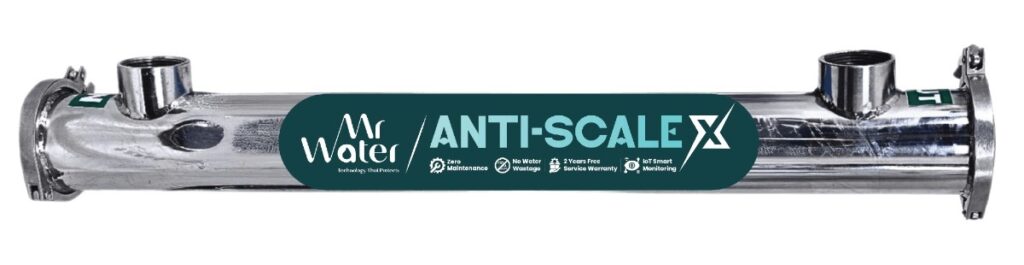
Mr. Water Anti-Scale X is a salt-free, chemical-free water conditioning system that helps reduce limescale formation in your plumbing, geysers, washing machines, and other water-using appliances.
Unlike traditional water softeners, it does not remove calcium and magnesium from the water.
Instead, it changes the way these minerals behave, making them less likely to stick to surfaces and form hard scale deposits.
As a result, your plumbing system stays cleaner, appliances perform more efficiently, and maintenance costs can be reduced over time.
How Does Anti-Scale X Work?
The technology behind Anti-Scale X is simple yet highly effective.
Here’s how it works:
Step 1: Water Enters the Conditioning Chamber
Hard water flows through the Anti-Scale X unit installed on your home’s main water line.
Step 2: Electrolysis Technology Activates
Inside the unit, specially engineered titanium electrodes create a controlled electric field.
This process influences how dissolved calcium and magnesium minerals behave in the water.
Step 3: Minerals Stay Suspended
Instead of attaching to pipes and heating elements, the minerals remain suspended in the flowing water.
This significantly reduces the formation of stubborn limescale.
Step 4: Your Home Stays Protected
Conditioned water flows throughout your home and helps protect:
- Water pipelines
- Bathroom fittings
- Geysers
- Washing machines
- Water heaters
- Kitchen appliances
- Shower heads
- Taps and faucets
The result is cleaner plumbing, lower maintenance, and improved appliance performance.
Why Homeowners Choose Anti-Scale X
Every homeowner wants a water treatment solution that works efficiently without adding extra maintenance.
Anti-Scale X is designed with that goal in mind.
Key Benefits
✅ Helps reduce limescale buildup
✅ Salt-free technology
✅ Chemical-free operation
✅ No wastewater generation
✅ Low maintenance
✅ Eco-friendly solution
✅ Protects household appliances
✅ Supports better plumbing performance
✅ Suitable for Indian borewell and municipal water
Anti-Scale X vs. Traditional Water Softeners
| Feature | Mr. Water Anti-Scale X | Traditional Water Softener |
|---|---|---|
| Salt Required | ❌ No | ✅ Yes |
| Chemicals | ❌ No | Sometimes |
| Water Wastage | ❌ None | ✅ During regeneration |
| Regular Salt Refills | ❌ No | ✅ Yes |
| Maintenance | Very Low | Moderate to High |
| Whole-Home Protection | ✅ Yes | ✅ Yes |
| Environment Friendly | ✅ Yes | Moderate |
| Helps Reduce Scale | ✅ Yes | ✅ Yes |
Ideal Applications for Anti-Scale X
Anti-Scale X is suitable for a wide range of residential properties, including:
Independent Homes
Protect expensive plumbing systems, water heaters, and bathroom fittings from mineral buildup.
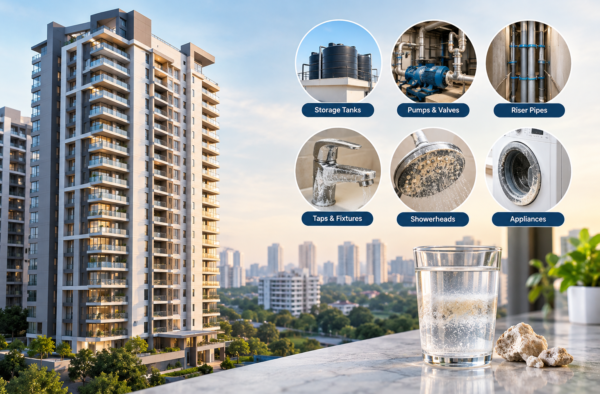
Apartments
Improve water quality throughout the apartment while reducing scale accumulation in common household appliances.
Villas
Provide whole-home protection without the hassle of regular salt refills.
Homes Using Borewell Water
Borewell water often contains high mineral content.
Anti-Scale X is an excellent solution for reducing scale-related issues in these homes.
Common Household Problems Anti-Scale X Helps Address
Many homeowners experience these issues daily:
- White stains on taps
- Blocked shower heads
- Reduced water pressure
- Frequent geyser repairs
- Washing machine maintenance
- Dry skin after bathing
- Soap not lathering properly
- Cloudy utensils
- Higher electricity bills
Installing a whole-home conditioning system helps reduce these problems before they become expensive repairs.
Why Choose Mr. Water?
Choosing the right water treatment company is just as important as choosing the right technology.
At Mr. Water, We Focus On:
Advanced Water Treatment Technology
Innovative solutions designed for Indian water conditions.
Customized Water Analysis
Every home receives different water quality.
Our experts help identify the right solution based on your water hardness level.
Professional Installation
Proper installation ensures maximum performance and long-term reliability.
Reliable Customer Support
Our team is available to provide guidance, maintenance assistance, and technical support whenever needed.
Long-Term Value
Our solutions are designed to help homeowners reduce maintenance costs while protecting valuable household appliances.
Why Trust Mr. Water?
At Mr. Water, we are committed to delivering innovative water treatment solutions that address real-world hard water challenges.
Our systems are developed to help homeowners protect plumbing, extend appliance life, and reduce scale buildup without relying on harsh chemicals or frequent maintenance.
With advanced technology, expert consultation, and customer-focused service, we help families make informed decisions about improving water quality in their homes.
Expert Tip
Test your water before choosing a solution.
Every home has different water conditions.
A professional water hardness test ensures that you invest in the right treatment system based on your actual water quality rather than assumptions.
Customer Scenario
Before Installing Anti-Scale X
- White deposits on taps every week
- Geyser heating slowly
- Frequent plumbing maintenance
- Soap consumption increasing
- Dry skin after bathing
After Installing Anti-Scale X
- Noticeably reduced scale buildup
- Cleaner bathroom fittings
- Improved appliance efficiency
- Less cleaning effort
- Better protection for plumbing and household equipment
Results may vary depending on water hardness levels, installation, and usage conditions.
Ready to Protect Your Home from Hard Water?
Don’t wait until scale damages your plumbing and appliances.
A simple water hardness test today can help you avoid costly repairs tomorrow.
Whether you use borewell water or municipal water, Mr. Water Anti-Scale X offers a modern, eco-friendly solution to help reduce limescale buildup and protect your home’s water system.
Get Started Today
Schedule a Free Water Hardness Test
Speak with a Water Treatment Expert
Find the Right Solution for Your Home
Protect Your Plumbing and Appliances for Years to Come
Contact Mr. Water today and take the first step toward a cleaner, healthier, and more efficient water system.
Frequently Asked Questions (FAQs)
1. Is hard water safe to drink?
Yes. Hard water is generally safe to drink because it contains naturally occurring minerals like calcium and magnesium. However, while it may not pose a health risk, it can cause scale buildup in pipes and appliances, increase maintenance costs, and affect your skin, hair, and cleaning efficiency.
2. How can I tell if my home has hard water?
Common signs of hard water include:
- White stains on taps and showerheads
- Soap that doesn’t lather easily
- Dry skin and rough hair after bathing
- Cloudy glassware
- Reduced water pressure
- Frequent geyser or washing machine repairs
The most accurate way to confirm hard water is through a professional water hardness test.
3. Does boiling water remove hard water?
Boiling only helps reduce temporary hardness caused by bicarbonates. It does not remove permanent hardness, which is responsible for most household scale buildup.
For long-term protection, installing a suitable water treatment system is a better solution.
4. What is the difference between a water softener and a water conditioner?
A water softener removes calcium and magnesium minerals using ion-exchange technology and requires regular salt refills.
A water conditioner, such as Mr. Water Anti-Scale X, does not remove minerals. Instead, it changes how they behave, helping reduce limescale formation without using salt or chemicals.
5. Is Anti-Scale X suitable for borewell water?
Yes. Anti-Scale X is designed to perform effectively with both borewell water and municipal water supplies.
Since borewell water often contains higher mineral levels, it can be especially beneficial for protecting plumbing and household appliances.
6. Will Anti-Scale X affect the taste of my drinking water?
No.
Because Anti-Scale X does not add salt or chemicals to the water, it does not significantly change the taste or odor of your drinking water.
7. Does Anti-Scale X require regular maintenance?
Anti-Scale X is designed to be a low-maintenance system.
Unlike traditional softeners, it does not require:
- Salt refills
- Chemical regeneration
- Brine tanks
- Wastewater discharge
Following the manufacturer’s recommended maintenance schedule helps ensure long-term performance.
8. Can hard water damage my washing machine?
Yes.
Hard water can cause mineral deposits to accumulate inside washing machines, reducing efficiency and increasing wear on internal components.
Protecting your water supply helps extend the lifespan of your appliance.
9. Why is my electricity bill increasing because of hard water?
Limescale acts as an insulating layer on heating elements.
This forces appliances such as geysers and water heaters to work harder and consume more electricity to produce the same amount of heat.
Reducing scale buildup can improve energy efficiency over time.
10. Can hard water affect my skin and hair?
Yes.
Hard water may leave mineral residue on your skin and hair, which can contribute to:
- Dry skin
- Itchy skin
- Frizzy hair
- Dull hair
- Soap residue after bathing
Many homeowners notice improvements after addressing hard water issues.
11. How often should I test my water?
It is recommended to test your home’s water hardness at least once a year.
If you notice new signs of scale buildup, changes in water quality, or switch to a borewell supply, testing sooner is advisable.
12. Which hard water solution is best for my home?
The best solution depends on:
- Your water hardness level
- Water source
- Household size
- Daily water usage
- Budget
- Maintenance preferences
A professional water analysis can help determine the most suitable system for your needs.
Conclusion
Hard water is one of the most common yet overlooked household problems.
Although it is generally safe to drink, it can silently reduce the lifespan of your plumbing, geysers, washing machines, bathroom fittings, and other water-using appliances.
Ignoring hard water today can lead to higher maintenance costs, increased electricity bills, and unnecessary repairs in the future.
The good news is that effective solutions are available.
Whether you choose a traditional water softener or an advanced salt-free system like Mr. Water Anti-Scale X, taking action today can help protect your home for years to come.
A simple water hardness test is the first step toward improving your home’s water quality and preventing costly scale-related damage.